
Tobacco & Vaping Prevention
Because healthy students are better learners, Eaton RESA is committed to partnering with local districts and community organizations to support regional efforts in preventing youth vaping and tobacco use. Nicotine addiction harms developing brains and increases the risk of serious long-term health issues, making early education, intervention, and access to information important. Explore the resources below—tailored specifically for parents, educators, and young people—to help support healthy futures.
Check out these resources:
Resources for Educators
School Campus Policy Resources
- State Guidance Doc-Michigan K-12 School Responses to Tobacco Use and Vaping
- Tobacco-Free School Campus Policy (American Lung Association)
- Vape-Free Schools Initiative (American Lung Association)
- Prevent Kids from Using Tobacco (MDHHS)
- Resources for Tobacco-Free and Vaping-Free Schools and Communities (Alliance for a Healthier Generation)
For local help with school policy, contact Barry-Eaton District Health Department Tobacco Support Specialist, Kaylynne Luzbetak.
Tier 1-Prevention and Universal Education Resources
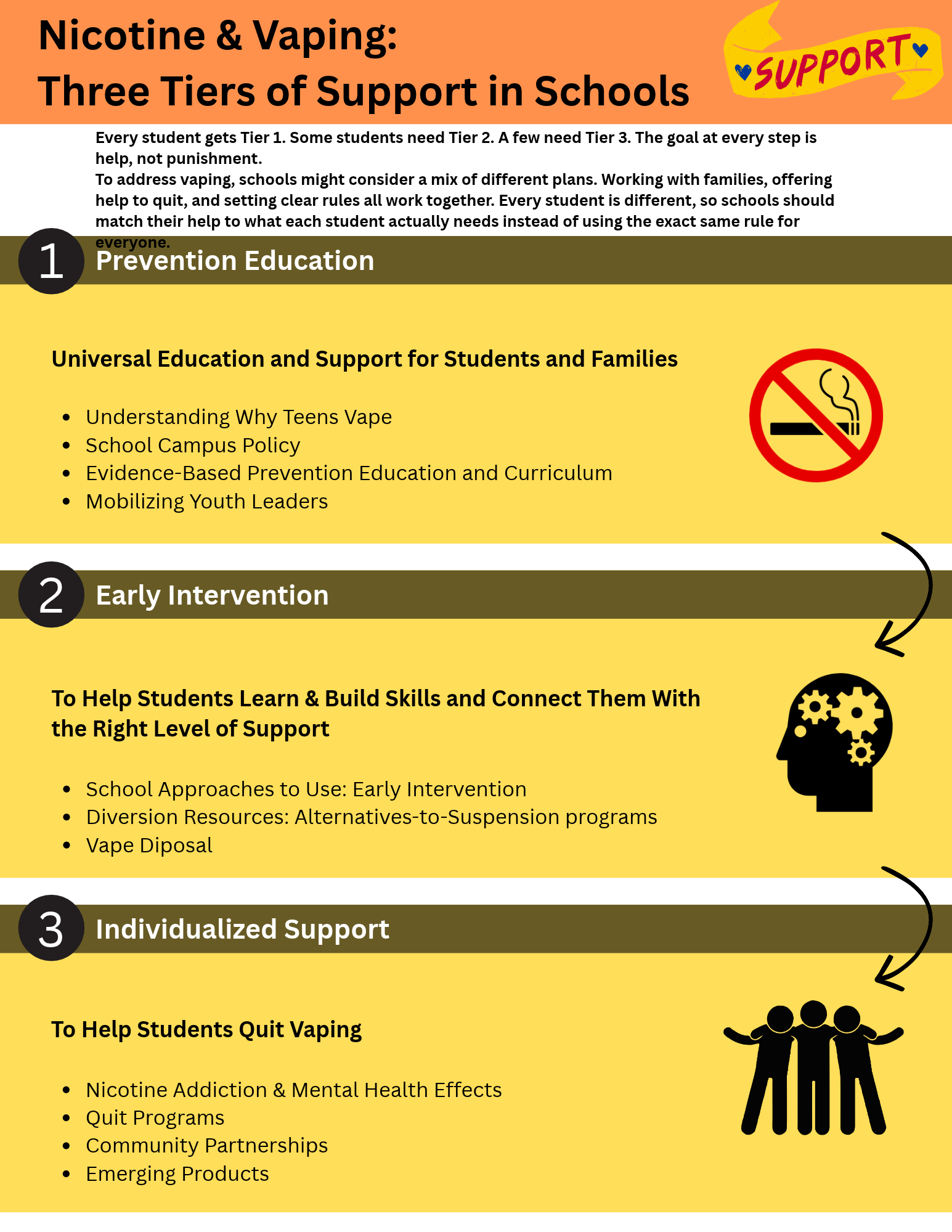
To address vaping, schools might consider a mix of different plans. Working with families, offering help to quit, and setting clear rules all work together. Every student is different, so schools should match their help to what each student actually needs instead of using the exact same rule for everyone.
Understanding Why Teens Vape and General Information to Share with Teens
General Info to Share with Teens
Effective Prevention
Effective Prevention strategies are strategies that have proven effective in preventing or reducing youth substance use. The American Lung Association Urges Schools to Use Proven Resources to Address Vaping Instead of Vape Detectors and Punishment.
The Athena Forum offers a best practices toolkit called Prevention Tools: What works, what doesn't.
Evidence-Based Education & Prevention Programs (Curriculum Options)
Training Opportunities
Mobilizing Youth Leaders
Collaboration with PALs (Peer Assistance and Leadership), YAC (Youth Advisory Council), & GSA (Gender and Sexuality Alliance) groups in your schools for learning activities.
PALs are trained student leaders who help build positive relationships in their schools. By starting peer-led vaping education and awareness projects, PALs can help improve school culture and support students in making healthy choices.
Good health programs start by listening to students. You can use Eaton RESA’s Health & Wellness Youth Advisory Council (YAC) to include real student voices in your school's wellness plans. Student leaders are ready to review vaping prevention messages, help guide health policies, and support your school. Reach out to the council to make sure your programs truly help young people.
GSAs are welcoming clubs that support student connection and positive school culture. You can work with your GSA to create campaigns that promote mental health and healthy choices. They can also share simple, positive ways for students to handle stress without using vapes or nicotine.
All student groups can work together on vape-free projects. Student councils, sports teams, clubs, and honor societies can share resources, promote healthy ways to manage stress, and host vape-free challenges so every student gets support.
Contact Aly McClintock for more information on utilizing youth voice or starting up a youth program like PALs, GSA, or utilizing our Health & Wellness YAC.
Example: ERPS Layout for Vaping Education Week.docx
Questions about this:
Contact Barry-Eaton District Health Department Tobacco Support Specialist Services, Kaylynne Luzbetak.
Tier 2- Targeted Supports
For a student experimenting with vaping, early interventions should educate, build skills, and connect the student with the right level of support. Schools should consider including supportive learning programs in tobacco-free and vape-free policies. This comprehensive approach would require providing long-term support programs to students who violate policies.
Approach to Student Use Early-Intervention
- Discipline Is Not the Answer: Better Approaches to On-campus Student Tobacco Use
- What should educators do if they catch students vaping at school?
- American Lung Association Urges Schools to Use Proven Resources to Address Vaping Instead of Vape Detectors and Punishment
- MDHHS Tobacco in Schools: Rethinking Zero Tolerance - A New Vision for School Tobacco & Nicotine Policies - MASSP
Diversion Resources: Alternatives to Suspension
In addition to providing prevention education to youth, it is recommended that schools provide Diversion resources, sustainable care, and community education. Diversion programs can be facilitated by the school or community partners.
Intervention for Nicotine Dependence: Education, Prevention, Tobacco and Health (INDEPTH) is an alternative to suspension program that teaches young people about the risk factors for nicotine addiction and ways to quit vaping.
Eaton RESA is creating a consistent Tri-County referral pathway using the INDEPTH program for youth who violate tobacco or vaping policies.
Four weekly virtual sessions over Zoom
Available to referred youth across the Tri-County area
Rotating Eaton RESA instructors
School Referral Pathways are being developed
Not-on-Tobacco is being considered for youth needing more cessation support than INDEPTH provides.
Contact: Luca Hicks
My Life, My Quit provides individualized free support for youth who want to stop vaping, smoking, or using other nicotine products. Services include coaching, quit planning, and digital support. Text "Start My Quit" to 36072.
Tier 3- Individualized Support
To help youth stop nicotine use, give helpful info about programs that support quitting tobacco and vaping to any student caught using these products. Make sure to offer these resources the first time it happens and keep providing them with encouragement.
Nicotine & Addiction
Quit Programs
Local Resources can be found in our Tri-County Community Health Guide
Community Partnerships and Referral Sources
Barry-Eaton District Health Department Tobacco Support Specialist Services: KLuzbetak@bedhd.org
Emerging Products
Resources for Families
Vaping Awareness & Education For Families
What is an E-cigarette and How Does It Work?
Electronic Cigarettes and Vaping
CATCH My Breath Parent Resources - YouTube
Why Kids are Vaping: Addiction and Mental Health
Nicotine & Addiction | Smokefree Teen
Why Is My Teen Vaping? The Link Between Vaping & Mental Health
Stress Management | EX Program
How to Talk to Your Kids
helps parents and caregivers in Michigan talk to kids about vaping, alcohol, tobacco, and other drugs. It focuses on starting conversations early, sharing facts, and keeping the talk going over time.
Programs to Help Your Child Quit
Local Resources can be found in our Tri-County Community Health Guide.
If You Need Help Quitting
Emerging Products
Community Partnerships
Barry Eaton District Health Department, contact Tobacco Support Specialist, Kaylynne Luzbetak.
Vape Disposal
Local systems are not equipped to dispose of vape devices in an environmentally friendly way. Preliminary guidance recommends that you place confiscated e-cigarettes, batteries with both terminals taped, and e-liquid products into individually sealed plastic bags.
Store these safely in a fire-safe cabinet until the household hazardous waste vendor provides packages and labels for safe transportation and proper disposal. These packages and labels should be provided through an established contract with your organization and county/municipal entity authorized for transportation and disposal.
Resources for Young Adults & Students
Vaping Awareness, Education & Youth Support
Effects on Mental Health
Want to Quit?
Find 100% free, anonymous, and confidential programs. Local resources can be found in our Tri-County Community Health Guide.
Support & Recovery Resources
Vaping Disposal
Vape Disposal
Local systems are not equipped to dispose of vape devices in an environmentally friendly way. Preliminary guidance recommends that you place confiscated e-cigarettes, batteries with both terminals taped, and e-liquid products into individually sealed plastic bags.
Store these safely in a fire-safe cabinet until the household hazardous waste vendor provides packages and labels for safe transportation and proper disposal. These packages and labels should be provided through an established contract with your organization and county/municipal entity authorized for transportation and disposal.
Add contacts here...


